
| Country & Site | South Africa – Khuma, Stilfontein |
| Organisation | Lefika La Ka |
| Main AHD Area | Referral & Linkage, CLM/Advocacy |
What Was the Problem?
As part of community tracing activities, the Lefika La Ka team was working to locate individuals who had interrupted HIV treatment and were no longer attending health facilities for medication collection. The purpose of the visits was to reconnect people to care and better understand the barriers preventing them from remaining on treatment.
During one tracing exercise, the team was directed to an informal dumping site on the outskirts of the community. What they encountered there revealed the harsh realities faced by some of the most vulnerable members of society.
Families were living among piles of discarded waste, relying on scavenging and recycling materials as their primary source of income and, in some cases, food. Makeshift shelters constructed from plastic sheeting, scrap metal, and salvaged materials provided little protection from the weather, disease, or other environmental hazards.
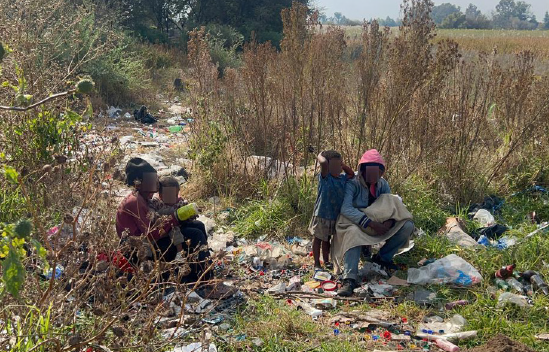
The team observed children and adults searching through refuse in order to survive. Many households had limited access to stable food supplies, safe shelter, employment opportunities, or basic services. In this environment, daily survival often took precedence over healthcare.
The visit highlighted a difficult but important reality: people living with HIV may struggle to prioritise treatment adherence when they are facing hunger, homelessness, unemployment, and extreme poverty.
What Did the Community Team Do?
- Conducted community tracing to locate individuals who had stopped attending clinics.
- Engaged community members to understand barriers to treatment adherence.
- Documented social and economic challenges affecting access to HIV services.
- Used findings to advocate for more integrated responses that address health and social needs.
What Changed?
- The tracing activity provided deeper understanding of the realities faced by vulnerable community members.
- The findings strengthened discussions around social determinants of health.
- The experience highlighted the need for stronger linkages between HIV services and social support programmes.
Why This Matters?
Many people living with HIV struggle to remain in care because of poverty, hunger, unemployment, unstable housing, and social exclusion. Addressing these barriers is essential for improving treatment outcomes and reducing Advanced HIV Disease.
Key Lesson
Effective HIV responses must extend beyond the clinic. Understanding and addressing the social realities that shape health outcomes is critical to achieving long-term success in HIV care and treatment.