
On this page, explore how research drives progress in AHD care — with access to key studies, clinical trial results, guidelines, and insights shaping policy and practice across sub-Saharan Africa.
This page offers clinical resources, training tools, patient support, policy content, multimedia, and accessibility features — all designed to support comprehensive care and education.
Tuberculosis (TB)
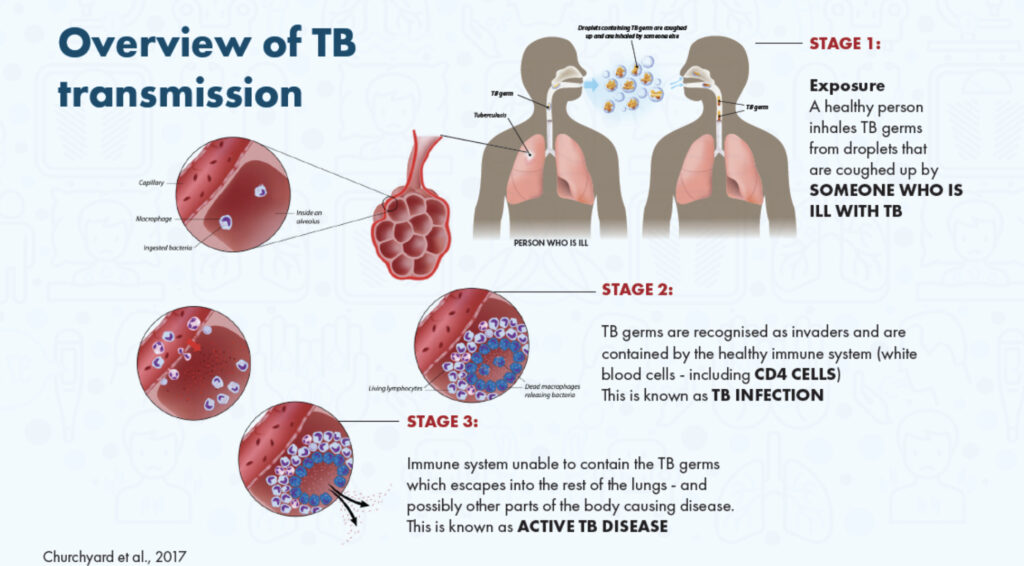
TB is caused by the bacterium Mycobacterium tuberculosis, which most often infects the lungs. It spreads through the air when a person with TB coughs or sneezes. People with advanced HIV disease (very weak immune systems) are especially vulnerable. TB is the leading cause of illness and death among people living with HIV worldwide. In 2021, an estimated 187,000 people died from HIV-associated TB, highlighting the need for early detection and treatment. (who.int)
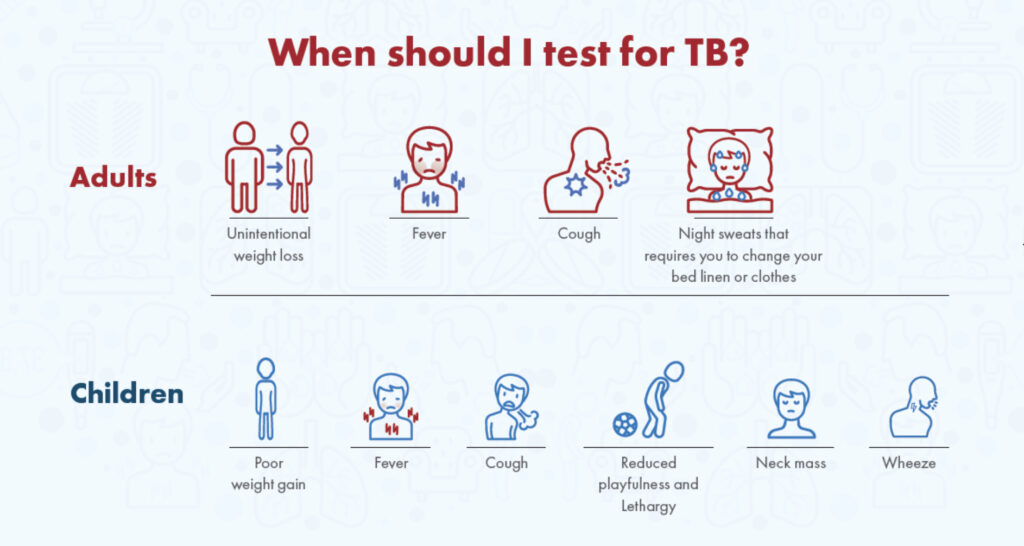
Symptoms
The symptoms of TB usually develop slowly over weeks or months. Common signs include:
Tuberculosis (TB)
Diagnosing TB involves a combination of clinical evaluation and specific tests:
- Medical examination and history: A healthcare provider will ask about symptoms (like cough, fever, weight loss) and listen to the lungs. They will also consider risk factors (such as HIV status or exposure to someone with TB).
- Sputum tests: The patient is asked to cough up sputum (mucus from the lungs). This sample is examined for TB bacteria. Modern tests like GeneXpert (a rapid DNA test) can detect TB bacteria and also check for drug resistance within a day. Also, other near-point of care (POC) tests PCR-based are being developed. Traditional methods include sputum smear microscopy (looking for TB bacteria under a microscope) and culture tests (growing the bacteria in a lab), which confirm the diagnosis.
- Chest X-ray: An X-ray of the chest can show abnormalities suggestive of TB in the lungs, such as cavities or infiltrates. While an X-ray alone can’t confirm TB, it provides important clues and is used alongside sputum tests.
- Other tests: If TB is suspected outside the lungs, different tests are done according to the area. For example, TB meningitis might be diagnosed by testing cerebrospinal fluid (via lumbar puncture), and abdominal TB might require an ultrasound or CT scan. There is also a skin test (Mantoux/PPD test) and a blood test (IGRA) that can indicate if someone has been infected with TB bacteria; however, these tests can’t tell if the disease is active, especially in people with HIV (they may be less reliable when the immune system is very weak).
- TB-LAM: test of importance in the package of care for people with AHD. It is a urine-based test to diagnose TB with good sensitivity in PLHIV and CD4<200 cells/mm3.
- TB is particularly challenging to diagnose in children. For this, WHO has developed and recommended TB diagnostic Algorithms that aim to include diagnosis of TB in children living with HIV. TDAs are adapted to be used in settings with access to x-ray and for settings without x-ray. They provide a scoring system to aid in establishing a TB diagnosis.
- TB culture and Drug sensitivity testing. Ultimate gold standard to diagnose TB and identify drug-sensitivity.
Early diagnosis is crucial. Healthcare workers are advised to routinely screen people living with HIV for TB symptoms at clinic visits. If TB is suspected or confirmed, further tests may be done to determine if the strain is drug-resistant, which helps in planning the right treatment.
TB is treatable and curable with a combination of antibiotics. The standard treatment for drug-sensitive TB in adults is a 6-month course of multiple antibiotics taken together (commonly: isoniazid, rifampicin, ethambutol, and pyrazinamide for the first 2 months, followed by isoniazid and rifampicin for 4 more months). It’s very important to take all medications as prescribed and not miss doses. Directly Observed Therapy (DOT), where a healthcare worker helps supervise the daily intake of medicine, is sometimes used to support patients in completing treatment.
Children living with HIV and with non-severe TB can be treated with a 4-month regimen.
Key points about TB treatment include:
- Combination therapy: TB bacteria die slowly, and using multiple drugs prevents them from becoming resistant. Taking all the drugs for the full duration (even if one starts feeling better sooner) is necessary to fully eradicate the infection.
- Managing side effects: TB medicines can have side effects (like nausea or, in the case of isoniazid, nerve issues that are prevented by taking vitamin B6). Healthcare providers will counsel patients on what to expect and do regular check-ups (including blood tests to monitor liver function since some TB drugs can affect the liver).
- TB/HIV co-treatment: People with TB who are also living with HIV should start antiretroviral therapy (ART) as soon as it is safe to do so, in order to improve their immune response. Often TB treatment is begun first, and HIV treatment is initiated within the first 2–8 weeks of TB treatment. Managing both treatments together can be complex (due to pill burden and potential drug interactions), but it significantly improves outcomes.
- Drug-resistant TB: If tests show the TB strain is resistant to standard drugs (MDR-TB or XDR-TB), treatment will involve different medications and current treatment regimens require 6 months treatment or longer. Specialised regimens are used in these cases, and patients may be referred to dedicated TB services.
With proper treatment, most people with TB will recover. Support from healthcare workers (for example, adherence counselling or community health worker follow-up) helps patients complete therapy. In hospital or clinic settings, infection control (like isolating people initiating TB treatment until past their infectivity period, improving flow of patients and other administrative measures, and healthcare workers using masks) is also part of treatment to prevent spread of infection.
Preventing TB, especially in people with HIV, involves several strategies:
- TB Infection Control: Since TB is airborne, good ventilation in homes and clinics is important (this is part of administrative measures of infection control). Natural light (UV light) can also kill TB bacteria in the air. Coughing hygiene is important to be included in all health education sessions for everyone, as it is important for people with confirmed TB and not on treatment, on early treatment or people with suspected TB (not yet diagnosed). People known to have active TB should cover their mouth when coughing and ideally wear a mask in crowded places until treatment risk of transmission of infection.
- TB Preventive Treatment (TPT): After TB disease is excluded, people living with HIV may be offered a preventive antibiotic like 3HP, a weekly regimen of rifapentine+isoniazid for 3 months or 1HP, taken daily for 28 days. If these treatments are not available, 6H or 9H, taken daily for 6 or 9 months is recommended. This preventive treatment kills dormant TB bacteria and has been shown to reduce the risk of developing TB in the future. CLHIV will also benefit from TPT with 6H or 3HR or 3HP in children aged 2 years or older.
- ART (Antiretroviral Therapy): The most effective way to prevent TB in someone with HIV is to keep their immune system strong. Starting and staying on HIV treatment helps the immune system fight off TB. Studies show that ART greatly lowers the risk of TB in people with HIV.
- BCG vaccine: Bacille Calmette–Guérin (BCG) is a vaccine given to infants in many countries with high TB rates. It primarily protects children against severe forms of TB (like TB meningitis). However, BCG’s protection in adults is variable, and it’s not usually given to HIV-positive babies with signs of immune suppression (due to safety concerns). Currently, no effective TB vaccine exists for widespread adult use, but research is ongoing.
- Regular screening: People living with HIV should be regularly screened for TB symptoms during clinic visits. If they have been in close contact with someone with TB, they should inform healthcare providers. Regular check-ups mean if TB does develop, it can be caught and treated early, preventing more severe illness or transmission to others. People with AHD should also be screened with urine TB-LAM. There are not yet recommendations on how often TB-LAM should be performed in people with AHD for routine screening.
Community measures like improving living conditions (reducing overcrowding, improving nutrition) also help lower TB risk. Cough etiquette (covering mouth and nose) and prompt treatment of anyone with active TB are cornerstones of TB prevention – once a TB patient is on proper treatment for a couple of weeks, they usually become much less infectious. In summary, a combination of medical prevention (preventive therapy, vaccines), strong HIV care, and public health measures can significantly reduce TB in people with advanced HIV.
- WHO Global TB Report (2023): Comprehensive overview of TB worldwide, including HIV-associated TB statistics. (Highlights that TB remains a leading killer of people with HIV).
- WHO Policy on TB/HIV Collaborative Activities (2012): Guidance for national programs on integrating TB and HIV services.