
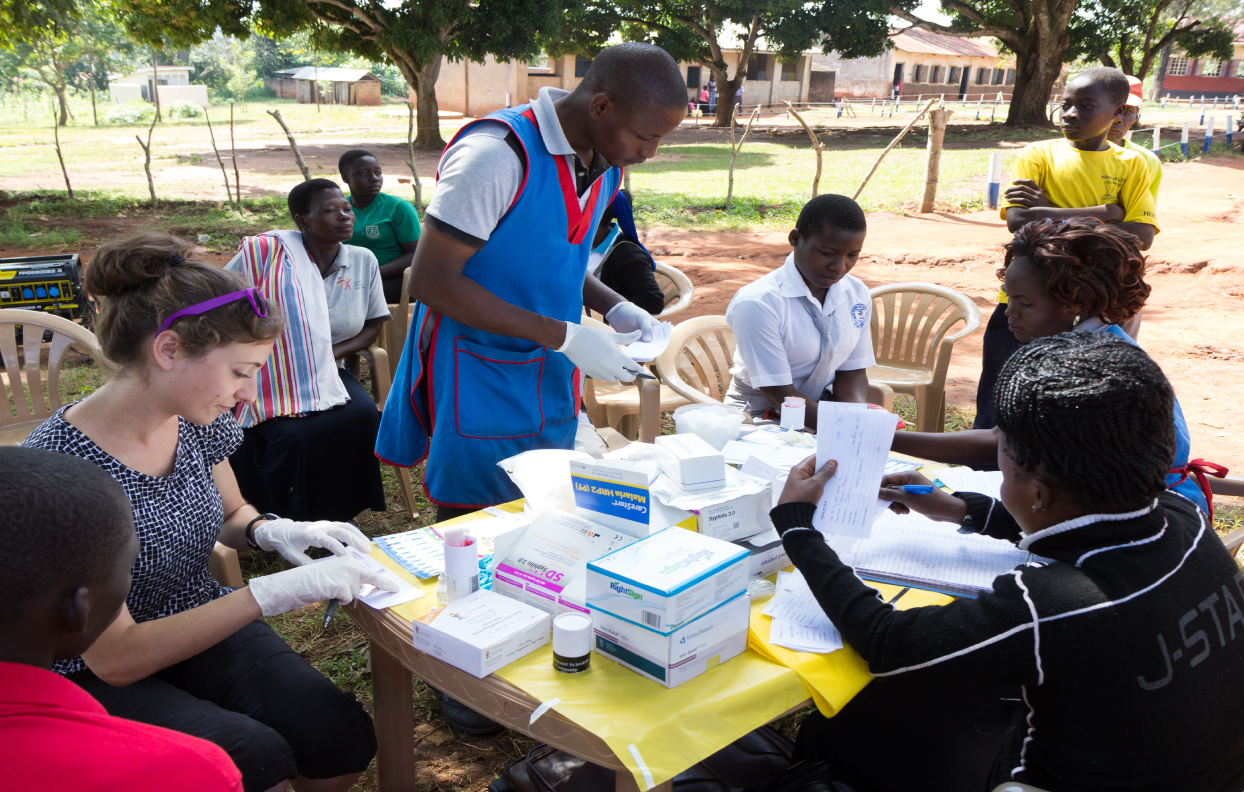

On this page, explore how research drives progress in AHD care — with access to key studies, clinical trial results, guidelines, and insights shaping policy and practice across sub-Saharan Africa.
This page offers clinical resources, training tools, patient support, policy content, multimedia, and accessibility features — all designed to support comprehensive care and education.
People with advanced HIV are prone to severe outcomes from fungal infections that a healthy immune system would normally control. WHO provides guidance on fungal infections in its updated 2025 guidelines (here).
O recommendations for the high burden fungal infections in AHD
| Infection | Signs & Symptoms | Screening / Diagnosis | WHO-Recommended Treatment | When to Start ART |
|---|---|---|---|---|
|
– Headache – Neck stiffness – Fever – Confusion – Seizures |
– Serum CrAg Test for screening of cryptococcal infection – CrAg test (if CD4 <100 (or <200 in many settings to align with definition of AHD or in settings using Visitect) |
– Single-dose liposomal amphotericin B + flucytosine + fluconazole |
Delay ART by 4–6 weeks |
|
|
– Fever – Weight loss – Fatigue – Cough – Enlarged liver/spleen – Skin lesions |
– Antigen detection test (if available) – Microscopy or culture (in endemic regions) |
– Itraconazole for mild/moderate cases – Amphotericin B for severe/disseminated disease |
Start ART within 2 weeks |
|
|
– Shortness of breath – Dry cough – Fever – Chest pain – Fatigue |
– Clinical diagnosis – Chest X-ray – Sputum or BAL (if accessible) |
– High-dose Cotrimoxazole (CTX) for 21 days – Add corticosteroids if hypoxic |
Start ART within 2 weeks |
Key Reminders:
- Prioritize early screening for systemic fungal infections in adults and adolescents with AHD at the point-of-care.
- Initiate appropriate interventions early: prevention, preemptive therapy, or treatment for all positive persons to improve outcomes.
- Ensure proper timing of ART significantly reduces mortality in persons with AHD-related fungal infections.
Cryptococcal meningitis is a serious fungal infection caused by Cryptococcus spp., most commonly Cryptococcus neoformans. People become infected by breathing in fungal spores found in the environment. In people with Advanced HIV Disease (AHD), the infection can spread from the lungs to the brain, causing meningitis, or to other parts of the body. Cryptococcal meningitis is one of the leading causes of death among people with AHD.
Symptoms:
Often presents as a subacute (slowly developing) meningitis. Common symptoms include headache, fever, confusion or changes in behavior, or pain, nausea/vomiting, and sensitivity to light These symptoms result from inflammation of the membranes around the brain and spinal cord. Cryptococcus can also infect the lungs, causing cough and chest pain, skin or other organs but brain infection (meningitis) is most feared.
Diagnosis:
The cryptococcal antigen (CrAg) test is the recommended test for detecting cryptococcal infection. CrAg testing can be performed on blood or cerebrospinal fluid (CSF). For people with Advanced HIV Disease (AHD), routine CrAg screening is recommended to identify cryptococcal infection early, before symptoms of meningitis develop.
People with a positive CrAg test should be assessed for symptoms and signs of cryptococcal meningitis. Where feasible, a lumbar puncture should be performed by a qualified healthcare worker to collect CSF and determine whether cryptococcal meningitis is present. CSF CrAg testing can then be used to support diagnosis and guide treatment.
Treatment:
Cryptococcal meningitis requires prompt treatment with antifungal medicines. WHO recommends an initial treatment with liposomal amphotericin B (administered intravenously) together with flucytosine for two weeks. This is followed by consolidation treatment with high-dose fluconazole for at least eight weeks, and then maintenance treatment with a lower dose of fluconazole. Treatment is continued for a minimum of six months.
People with Advanced HIV Disease (AHD) who have a positive cryptococcal antigen (CrAg) test but do not have symptoms or signs of cryptococcal meningitis should receive pre-emptive antifungal treatment to prevent progression to disease. This consists of fluconazole 800-1200 mg per day for adults and 12 mg/kg per day for adolescents for two weeks, followed by consolidation and maintenance fluconazole treatment. Throughout this course of treatment, healthcare workers must monitor the patient's response and drug reaction in accordance with WHO recommendations.
Prevention:
Early HIV diagnosis, prompt initiation of antiretroviral therapy (ART), and adherence to treatment are the most effective ways to prevent cryptococcal disease. There is currently no vaccine against Cryptococcus spp.
Screening for cryptococcal antigen (CrAg) is an important prevention strategy for people with Advanced HIV Disease (AHD). WHO recommends CrAg screening for people with AHD, particularly those with CD4 counts below 100 cells/mm³, to identify cryptococcal infection before symptoms develop. People who test positive for CrAg but do not have cryptococcal meningitis should receive pre-emptive antifungal treatment to prevent progression to disease. Because Cryptococcus spp. are widely present in the environment, exposure cannot be completely avoided. Maintaining effective ART and accessing recommended AHD screening and care services remain the most important measures for preventing severe cryptococcal disease.
Cause:
PCP is caused by Pneumocystis jirovecii, a fungus that specifically infects the lungs. This organism is very common – most people are exposed in childhood – and it can live in the lungs without causing illness. In people with advanced HIV (typically CD4 <200), it can reactivate and cause a severe pneumonia. PCP does not spread person-to-person like typical pneumonia; it arises from latent infection when immunity drops.
Symptoms:
PCP develops insidiously over days to weeks. Classic symptoms are progressive shortness of breath (difficulty breathing), a dry cough (without much sputum), and fever. Patients often feel weak and may have chest tightness. As pneumonia worsens, oxygen levels drop, leading to fatigue and rapid breathing. Unlike typical bacterial pneumonia, PCP usually does not produce a lot of phlegm; the cough is often unproductive. Without treatment, respiratory failure can occur. Chest X-ray typically shows bilateral infiltrates (hazy cloudiness in both lungs. In rare cases, PCP can also cause lesions outside the lungs (in lymph nodes, liver, etc.), but lung involvement dominates.
Diagnosis:
Doctors suspect PCP based on symptoms in a person with low CD4 count. A chest X-ray or CT scan usually shows a diffuse pneumonia pattern. The definitive diagnosis is by detecting the organism: this can be done by examining induced sputum or a bronchoalveolar lavage (fluid washed from the lungs via bronchoscopy) under a microscope with special stains, or by PCR test. Often, if clinical suspicion is high, treatment is started even before confirmation because PCP can be life-threatening.
Treatment:
High-dose trimethoprim-sulfamethoxazole (TMP-SMX), also known as cotrimoxazole or Bactrim, is the first-line treatment for PCP. It is given orally or IV for 21 days. In moderate to severe cases (when oxygen levels are low), corticosteroids (like prednisone) are added to reduce lung inflammation. Most patients improve with proper therapy. If a person is allergic to sulfa drugs, alternative treatments (such as pentamidine IV or atovaquone or clindamycin plus primaquine) are used. It’s important to treat PCP promptly; untreated PCP can be fatal.
Prevention:
Because PCP is so common in advanced HIV, preventive antibiotics are recommended for those at risk. Specifically, TMP-SMX prophylaxis is advised for anyone with CD4 count <200 cells/µL (or <14% lymphocytes) ). Taking one double-strength TMP-SMX tablet daily (or three times a week) greatly reduces the chance of PCP (). This prophylaxis also protects against toxoplasmosis and some bacterial infections. Prophylaxis can be stopped once the immune system recovers on ART (CD4 count >200 for several months). In addition, staying on ART to maintain a higher CD4 count is fundamental – effective ART is the best long-term prevention of PCP. There is no vaccine for PCP. General lung health (not smoking, avoiding exposure to heavy pollution) may help, but antibiotics are the main preventive measure in those with low CD4.
Cause:
Histoplasmosis is caused by the fungus Histoplasma capsulatum. The fungus is found in the environment, particularly in soil contaminated with bird or bat droppings. People become infected by breathing in fungal spores released into the air.
In people with healthy immune systems, infection is often mild or asymptomatic. In people with Advanced HIV Disease (AHD), the infection can become severe and spread beyond the lungs to other parts of the body. This form, known as disseminated histoplasmosis, can affect multiple organs and is a major cause of illness and death among people with AHD if not diagnosed and treated promptly.
Symptoms:
The symptoms are often non-specific and can resemble those of TB or other infections. Common signs include persistent fever, night sweats, weight loss, fatigue, and cough (if the lungs are involved). Patients may have enlarged lymph nodes, liver, or spleen, and sometimes skin lesions. Because it often disseminates, there can be anemia and low blood cell counts (if bone marrow is involved). In endemic regions, histoplasmosis is one of the most frequent opportunistic infections in AIDS and can cause significant mortality if not treated.
Diagnosis:
Histoplasmosis can be difficult to diagnose because its symptoms are like those of tuberculosis (TB) and other infections commonly seen in people with Advanced HIV Disease (AHD).
The recommended test for diagnosing disseminated histoplasmosis is a point-of-care Histoplasma antigen test using a urine sample. Histoplasma antigen testing can provide rapid results and is highly useful for detecting disseminated disease. Additional laboratory tests, such as fungal culture, microscopy, histopathology, or molecular testing, may be used in some settings to support diagnosis. However, these tests may be less accessible, take longer to produce results, or require specialized laboratory capacity.
Because histoplasmosis and TB can present with similar symptoms, healthcare providers should consider histoplasmosis in people with AHD who have symptoms suggestive of TB, particularly when they do not improve with TB treatment or when diagnostic tests for TB are negative.
Treatment:
Antifungal therapy is required to treat disseminated histoplasmosis. For severe cases (common in AHD), the recommended initial treatment is amphotericin B given IV for a couple of weeks, until the patient is stable. After that, patients switch to an oral azole antifungal (usually itraconazole) for an extended period (at least 12 months total therapy is common for disseminated histo in HIV). In less severe cases, itraconazole alone can be used as first-line. Symptoms typically improve significantly after a few weeks of therapy, but stopping treatment too early can lead to relapse. Patients should also start or continue ART to help immune recovery, but often clinicians will treat histoplasmosis for a couple of weeks before initiating ART (to reduce the risk of immune reconstitution syndrome).
Prevention:
The most effective way to prevent severe histoplasmosis among people living with HIV is prompt initiation of antiretroviral therapy (ART) and adherence to treatment. Maintaining a healthy immune system reduces the risk of developing severe or disseminated histoplasmosis. For people with Advanced HIV Disease (AHD), early recognition of symptoms, timely diagnosis, and prompt treatment are important for preventing serious illness and death from histoplasmosis.
Because Histoplasma capsulatum is found in the environment, exposure cannot always be avoided. When entering environments that may be contaminated with bird or bat droppings, protective measures such as wearing a mask may help reduce exposure to fungal spores. People with AHD should seek medical attention if they develop persistent fever, weight loss, cough, difficulty breathing, or other symptoms suggestive of infection. Healthcare providers should consider histoplasmosis as a possible diagnosis in people with AHD, particularly when symptoms resemble tuberculosis (TB) or when TB tests are negative.
Sources
Fungal Infection Tools & Resources
Histoplasmosis training slides (NIFUSCAB / Medical Mycology Society of Nigeria) – PowerPoint downloads
Online training and courses