
| Country & Site | South Africa – Khuma, Stilfontein |
| Organisation | Lefika La Ka |
| Main AHD Area | Paediatric AHD, ART Adherence, CLM/Advocacy |
What Was the Problem?
During a household tracing visit, the community team arrived at the address recorded by the health facility only to discover that the child they were searching for no longer lived there. The child’s father, who appeared visibly unwell, informed the team that the child had moved to another household. He himself appeared physically weak, was experiencing ongoing pain from burn injuries, and had a persistent cough.
After further tracing, the team located the seven-year-old child at her aunt’s home. What they found was a family facing multiple challenges far beyond HIV alone.
The child had been abandoned by her mother at a young age due to substance use challenges within the family. During early childhood she developed severe acute malnutrition, which affected both her growth and development. At seven years old, she was unable to walk independently and relied on an assistive device for mobility. She was also not attending school because of her special needs.
At the time of the visit, the child appeared acutely ill. She had a severe productive cough, appeared visibly chesty, and looked generally unwell. Clinic records showed that she was not virally suppressed and had a scheduled follow-up appointment in the coming days.
The child’s aunt, who had assumed responsibility for her care, described feeling overwhelmed and isolated. In addition to caring for a child with complex medical and developmental needs, she faced unemployment, financial hardship, repeated family bereavements, and the ongoing impact of substance abuse within the family.
The case highlighted how HIV often intersects with poverty, disability, family instability, caregiver stress, and social exclusion.
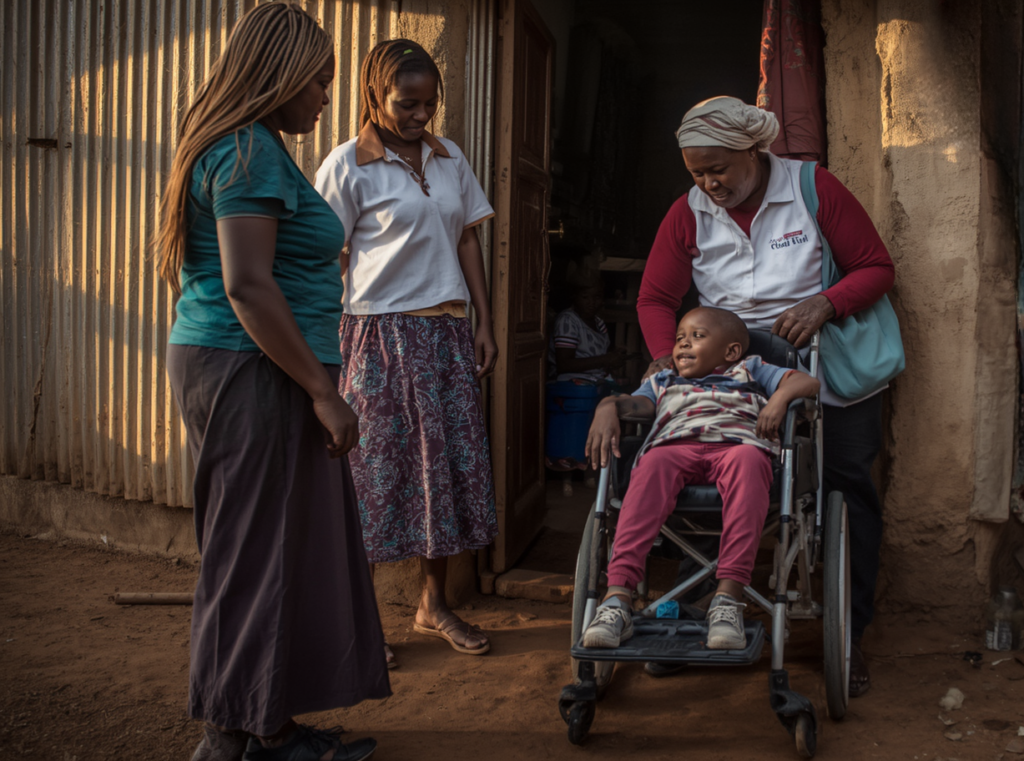
What Did the Community Team Do?
- Conducted household tracing to locate the child.
- Assessed the child’s health and living situation.
- Advised the caregiver to seek urgent clinic assessment.
- Discussed treatment adherence and clinic attendance.
- Identified psychosocial support needs for the caregiver and child.
What Changed?
- The child was successfully located and linked back to care.
- The caregiver received guidance on urgent health-seeking behaviour.
- Additional follow-up was planned to support the family.
- The visit highlighted gaps in psychosocial support, disability services, and caregiver assistance.
Why This Matters?
Children living with HIV often face multiple challenges beyond their medical condition. Poverty, disability, caregiver burden, family instability, and social exclusion can all affect treatment outcomes and retention in care.
Key Lesson
Viral suppression is not only a medical issue. It is closely linked to the social realities facing children and caregivers. Community-led support is critical to addressing these challenges.