

On this page, explore how research drives progress in AHD care — with access to key studies, clinical trial results, guidelines, and insights shaping policy and practice across sub-Saharan Africa.

This page offers clinical resources, training tools, patient support, policy content, multimedia, and accessibility features — all designed to support comprehensive care and education.
TB LAM Test
Description:
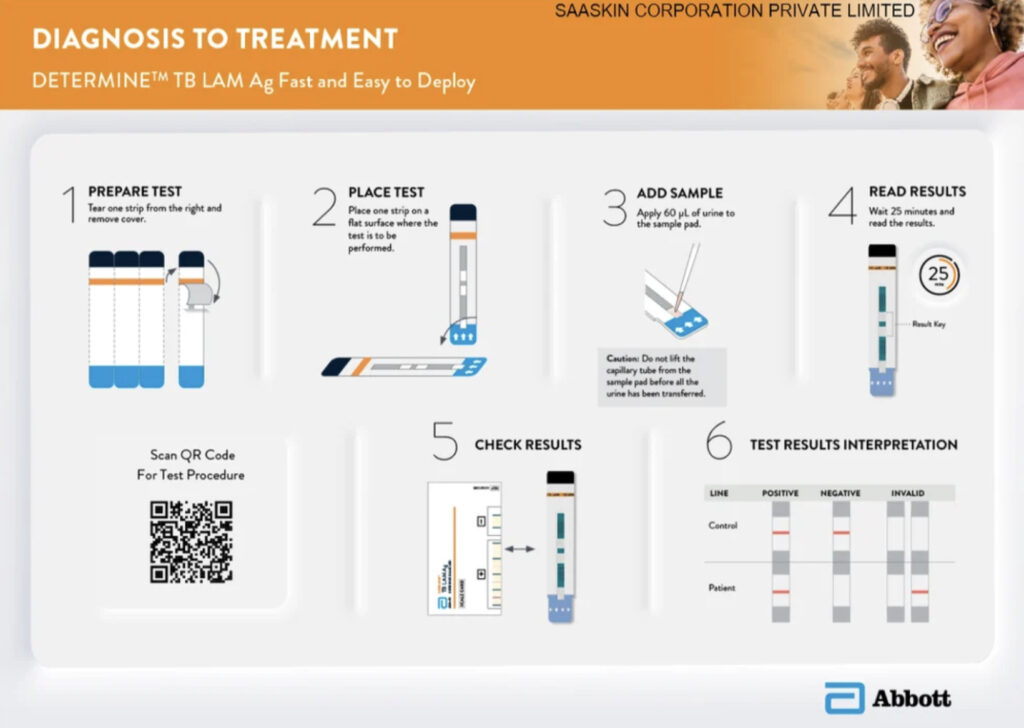
A rapid urine test that detects lipoarabinomannan antigen, aiding in the diagnosis of tuberculosis in HIV-positive individuals.
Determine™ TB LAM Ag Test
Xpert MTB/RIF and Xpert MTB/RIF Ultra

Resources & Tools
- Abbott Point of Care Resources: Provides detailed product information, benefits, and instructional videos for the Determine™ TB LAM Ag test. Abbott Determine™ TB LAM Ag Test Rapid Diagnostics
- Technical Information Note: Offers comprehensive guidance on the test's application, including supply information and training needs. Stop TB Partnership Technical Note (PDF) Stop TB Partnership
- MSF Technical Brief: Discusses the test's role in diagnosing TB among PLHIV, its benefits, and implementation strategies. MSF Technical Brief on TB LAM (PDF)
- South Africa National Guidelines: Provides a clinical reference guide for healthcare providers on using the lateral flow LAM assay. TB LAM Guidelines - South Africa (PDF)
Training Materials
CrAg Lateral Flow Assay
Description:
A point-of-care test that detects cryptococcal antigen in blood, facilitating early diagnosis of cryptococcal meningitis.
IMMY CrAg Lateral Flow Assay

Other Opportunistic Infection Diagnostics
In individuals with Advanced HIV Disease (AHD), the weakened immune system increases susceptibility to various opportunistic infections (OIs) beyond tuberculosis and cryptococcal disease. Diagnosing these OIs is crucial for timely treatment and improving patient outcomes. Common diagnostic tools include:
- Chest X-rays: Used to detect pulmonary infections like Pneumocystis jirovecii pneumonia (PJP) and bacterial pneumonias.
- Blood Cultures: Essential for identifying bloodstream infections caused by bacteria or fungi.
- Stool Examinations: Detect parasitic infections such as cryptosporidiosis and isosporiasis.
- Serological Tests: Identify infections like toxoplasmosis and cytomegalovirus (CMV).
- Lumbar Puncture: Diagnoses central nervous system infections, including meningitis caused by various pathogens.

Chest X-ray: Chest X-ray of an HIV patient showing multi-bilateral nodules and micronodules at the lung bases
Source
Blood Culture Test
Blood culture bottle being inoculated for detecting bloodstream infections.
This diagram shows the step-by-step process that a lab follows to check if someone has a serious infection in their blood, especially if they are very sick and standard tests didn’t find anything.
Resources & Tools
- Diagnostic Algorithms: WHO provides flowcharts for diagnosing common OIs like histoplasmosis and toxoplasmosis. These algorithms assist healthcare providers in making accurate diagnoses based on clinical presentations and available diagnostic tools
- Laboratory Diagnosis Manual: The WHO's "Laboratory Diagnosis of HIV Opportunistic Infections" manual offers comprehensive guidance on laboratory techniques for detecting various OIs in HIV-infected individuals
Training Materials
- WHO Training Modules: These modules cover the identification, diagnosis, and management of opportunistic infections in HIV patients. They provide practical guidance for healthcare workers in resource-limited settings
- Module on HIV/AIDS Overview: This module offers an introduction to HIV/AIDS, including the prevention and treatment of opportunistic infections, enhancing the capacity of healthcare providers to manage AHD effectively