
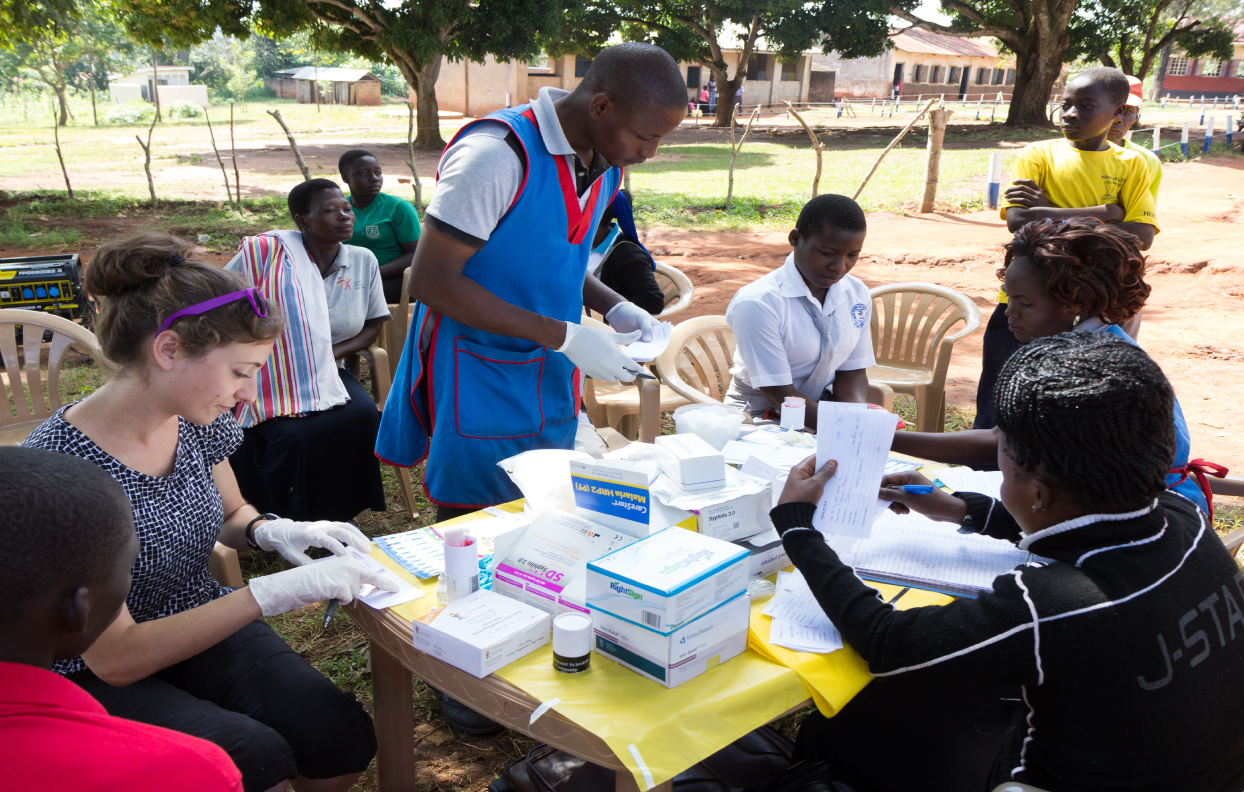

On this page, explore how research drives progress in AHD care — with access to key studies, clinical trial results, guidelines, and insights shaping policy and practice across sub-Saharan Africa.

This page offers clinical resources, training tools, patient support, policy content, multimedia, and accessibility features — all designed to support comprehensive care and education.
| Infection | Signs & Symptoms | Screening / Diagnosis | WHO-Recommended Treatment | When to Start ART |
|---|---|---|---|---|
|
Toxoplasmosis |
Headache, fever, confusion, seizures, focal neurological signs (e.g., weakness) |
Serology (IgG/IgM); CT/MRI brain showing ring-enhancing lesions |
Pyrimethamine + sulfadiazine + folinic acid. Alternative: Pyrimethamine + clindamycin |
Delay ART by 2 weeks after starting treatment |
|
Cryptosporidiosis |
Profuse watery diarrhea, weight loss, nausea, abdominal pain, dehydration |
Modified acid-fast stain on stool; antigen detection (if available) |
Supportive care (fluids, nutrition); nitazoxanide (if accessible); initiate ART |
Start ART promptly to aid immune recovery |
|
Strongyloidiasis |
Often asymptomatic; may cause abdominal pain, rash, diarrhea; hyperinfection in AHD |
Stool microscopy; serology (where available) |
Ivermectin is first-line; Albendazole is alternative |
Start ART after treatment to avoid IRIS |
|
Isosporiasis |
Watery diarrhea, abdominal cramps, weight loss |
Stool exam using modified acid-fast stain |
Cotrimoxazole (TMP-SMX); continue until symptoms resolve and immunity improves |
Start ART promptly |
- CTX prophylaxis helps prevent isosporiasis and toxoplasmosis, especially in people with CD4 <200.
- Strongyloides hyperinfection can be fatal; treatment should precede ART where possible.
- Cryptosporidiosis is often prolonged until ART restores immune function, hydration is critical.
Cause
Toxoplasmosis is caused by the parasite Toxoplasma gondii. In HIV, toxoplasmosis is usually due to reactivation of longstanding dormant infection. Many people become infected with Toxoplasma through ingesting undercooked, contaminated meat or from food/water contaminated with oocysts (from cat faeces) at some point in life. The parasite can then lie inactive in the body. When the immune system weakens (CD4 <100), it can reactivate. The most common manifestation in AIDS is Toxoplasma encephalitis – infection of the brain.
Symptoms
In advanced HIV, cerebral toxoplasmosis often presents with neurological symptoms. These include headache, confusion, fever, weakness or difficulty moving one side of the body, seizures, or even coma in severe cases. The onset can be subacute, developing over a week or two. Patients may have personality changes or altered mental status. Without treatment, the infection causes expanding lesions in the brain which are life-threatening. Toxoplasmosis can also affect eyes (chorioretinitis) or lungs, but in AHD these are less common than brain involvement.
Diagnosis
When an AIDS patient presents with the above symptoms, brain imaging is the first step. An MRI or CT scan will often show ring-enhancing lesions (one or multiple) in the brain, which is highly suggestive of toxo encephalitis in this context. Blood tests can detect Toxoplasma IgG antibodies – a positive IgG indicates prior exposure (common in many adults) and makes toxo likely; note that in late-stage HIV, antibody levels can be low, but most patients remain IgG positive. Definitive diagnosis would require detecting the parasite (for example, via a brain biopsy), but this is usually not done initially. Instead, if imaging and serology fit, doctors will start presumptive treatment for toxoplasmosis. A rapid clinical and radiological improvement on therapy strongly supports the diagnosis. If lesions do not respond, then a brain biopsy may be considered to check for other causes (like lymphoma).
Treatment
The standard treatment is pyrimethamine plus sulfadiazine, along with leucovorin (folinic acid) to prevent bone marrow side effects. This combination is given for at least 6 weeks at high doses to treat acute infection. If sulfadiazine is not available or not tolerated, clindamycin can be used with pyrimethamine. An alternative regimen is high-dose TMP-SMX, which is also effective and often used in resource-limited settings (or if the standard regimen is not tolerated). Patients usually start to improve clinically within 1–2 weeks of therapy. After the initial treatment, maintenance therapy (secondary prophylaxis) with lower-dose pyrimethamine-sulfadiazine (or TMP-SMX) is continued until the CD4 count is above 200 for at least 6 months on ART. This prevents recurrence. Concurrently, it’s important to initiate ART (usually after a couple of weeks of toxo therapy) to restore immunity.
Prevention:
Primary prophylaxis for toxoplasmosis is recommended for HIV patients with CD4 <100 who are IgG positive for Toxo. The good news is the same cotrimoxazole (TMP-SMX) prophylaxis used to prevent PCP will also prevent toxoplasmosis. A single double-strength TMP-SMX daily reduces the risk of toxo brain infection significantly. In addition, people with HIV should be counseled on avoiding exposure: Do not eat undercooked meat (cook meats to safe temperatures), wash fruits and vegetables well, and avoid exposure to cat feces. Those with cats should have someone else change the litter, or use gloves and wash hands thoroughly – and litter boxes should be changed frequently (oocysts in cat feces become infectious after 1-2 days). There is no human vaccine for toxoplasmosis. By combining prophylactic antibiotics, safe food habits, and ART to keep the immune system stronger, toxoplasmosis can often be prevented.
Cause:
Cryptosporidiosis is caused by Cryptosporidium parasites, which infect the small intestines. The disease is usually acquired by drinking water or eating food contaminated with the parasite. Crypto is found worldwide; it’s a common cause of diarrhea from contaminated swimming pools, lakes, or drinking water. In immunocompetent people, it causes a self-limited diarrheal illness. In AHD, it can cause chronic, severe diarrhea.
Symptoms
Profuse, watery diarrhoea is the hallmark. In people with healthy immunity, diarrhoea may last 1-2 weeks. In AHD, cryptosporidiosis often causes prolonged, persistent diarrhoea that can last for months if untreated. Patients may have diarrhea dozens of times a day, leading to dehydration. Other symptoms include stomach cramps, abdominal pain, nausea, vomiting, and weight loss due to malabsorption. Low-grade fever can occur. Chronic diarrhea from Crypto contributes to malnutrition and wasting in AIDS. Because of fluid loss, patients can develop electrolyte imbalances and kidney issues.
Diagnosis
Diagnosis is by detecting the parasite in stool. Standard ova and parasite exams might miss Crypto, so special stool tests are used. These include acid-fast staining of stool (Crypto oocysts appear as red round oocysts on a blue background) and stool antigen tests or PCR which are highly accurate. Sometimes multiple stool samples are needed because the parasite can be shed inconsistently. In resource-rich settings, a PCR panel for diarrhea pathogens can identify Cryptosporidium DNA in stool quickly.
Treatment
In immunosuppressed patients, cryptosporidiosis can be challenging to cure. The main specific treatment is nitazoxanide, an antiparasitic medication, which can shorten the duration of diarrhea. However, nitazoxanide is significantly less effective when CD4 counts are very low. Supportive treatment is critical: rehydration (oral rehydration solutions or IV fluids for severe dehydration), electrolyte replacement, and anti-motility agents (like loperamide) for comfort. If possible, starting or optimizing ART is essential – as the immune system improves, it can clear the infection. In fact, durable cure often requires immune reconstitution. In some cases, adjunct antibiotics like azithromycin have been tried, but their benefit is unclear. For persistent cases, physicians sometimes use octreotide (to reduce intestinal secretion) or other investigational therapies.
Outcome: With improved immune function, chronic cryptosporidiosis can resolve. Without it, Crypto can be a cause of chronic wasting or even death. Thus, treatment focus is on both parasite and HIV.
Prevention:
Safe water practices are the best prevention. Cryptosporidium is notable for being resistant to standard chlorine levels in tap water. People with advanced HIV should avoid drinking untreated water. Use boiled water or water filtered with a sub-micron filter (Crypto oocysts are about 4-6 µm, so filters of 1 µm or less can remove them). This is especially important in areas where water sanitation is poor. Also avoid swallowing water when swimming in pools, lakes, or rivers – even chlorinated pools can transmit Crypto. Practice good hand hygiene, especially after using the restroom or caring for others with diarrhea. There is no vaccine for Cryptosporidium for humans. In addition, cotrimoxazole prophylaxis does not reliably prevent Crypto (it’s more for bacteria/PCP), so the emphasis is on avoiding exposure. In some settings, prophylactic azithromycin has shown activity against cryptosporidiosis, but it’s not standard. Ultimately, keeping the immune system robust with ART is key: once on effective ART, the risk of severe Crypto dramatically drops (Opportunistic Infections in HIV) (because CD4 >100 can usually contain the parasite even if exposed).
Cause:
Strongyloidiasis is an infection by the intestinal roundworm Strongyloides stercoralis. This parasite has a unique life cycle and can cause chronic infection that autoinfects the host. Transmission is typically by exposure of skin to soil contaminated with larvae – often walking barefoot on soil in tropical/subtropical regions. The larvae penetrate the skin, travel through the bloodstream to the lungs, then up to the throat and are swallowed, maturing into adult worms in the intestines. In people with intact immunity, this usually causes mild or asymptomatic infection, with the worms living in the gut and occasionally causing issues. In immunocompromised people (especially those on corticosteroids or HTLV-1 infection; in HIV it’s less frequent but can happen in AHD), Strongyloides can cause a hyperinfection syndrome where larvae massively increase and spread through the body.
Symptoms:
Many with strongyloidiasis have no symptoms or very mild symptoms. If symptomatic, one might experience abdominal pain, bloating, intermittent diarrhea or alternating diarrhea and constipation. Another clue is a characteristic skin rash known as larva currens, which is an itchy, red, moving rash (often on thighs or buttocks) caused by migrating larvae in the skin. There can also be episodes of dry cough or throat irritation when larvae migrate through the lungs. In an advanced HIV patient, if hyperinfection occurs, symptoms become severe: severe diarrhea, abdominal distension, intestinal obstruction, pneumonia (from larvae in lungs), and potentially sepsis from bacteria carried by the larvae from the gut. Hyperinfection can be life-threatening, presenting with high fever, shock, and multi-organ failure.
Diagnosis:
Strongyloides can be diagnosed by finding larvae in stool or other body fluids. A standard stool ova and parasites exam might detect it, but often specialized methods (like stool concentration techniques or agar plate culture) are needed, because larvae can be few in number. Repeated stool exams increase yield. There is also a blood antibody test for Strongyloides which is quite sensitive; however, in advanced HIV the antibody levels might be lower (due to immune suppression) so it could give false negatives. In hyperinfection, larvae may be seen in sputum or bronchial fluid as well (since they disseminate). Given the dangers, some experts recommend screening patients from endemic areas for Strongyloides infection (with antibody test) when they are diagnosed with HIV, so that it can be treated before they become severely immunosuppressed.
Treatment: Ivermectin is the drug of choice for strongyloidiasis. For uncomplicated infection, a course of ivermectin (usually two doses, 200 µg/kg on two days) is very effective at clearing the parasite. Albendazole is an alternative, but less effective. In hyperinfection or disseminated strongyloidiasis, ivermectin is given daily (sometimes even twice daily) for a prolonged period until all signs of infection are gone and stool tests are repeatedly negative. In severe cases, treatment may need to continue for weeks. Supportive care (fluids, nutrition) and treating any secondary bacterial infections that arise (because Strongyloides can carry gut bacteria into the bloodstream) are also important. If the patient is on corticosteroids, those should be reduced if possible, as steroid use triggers hyperinfection. ART should be continued or initiated in HIV as soon as feasible to help immune recovery.
Prevention:
Avoid contact with contaminated soil. In endemic areas (tropical Asia, Africa, Latin America, and parts of the southeast US), this means wearing footwear and not walking barefoot on warm, moist soil. Proper sanitation (using toilets, not defecating outdoors) helps reduce soil contamination. Since the parasite can maintain a low-level presence for decades, screening and treating asymptomatic carriers (especially before giving them immunosuppressive therapy) is a preventive strategy. In people with AHD from endemic areas, some clinicians will empirically treat for Strongyloides to prevent hyperinfection, given the low cost and relative safety of ivermectin. There’s no vaccine. For known chronic carriers, staying on ART and avoiding other immunosuppressants helps contain the parasite. In summary, shoes, sanitation, and screening are the main preventive approaches for strongyloidiasis.
Cause:
Giardiasis is caused by Giardia duodenalis (also known as G. lamblia), a protozoan parasite. Like Crypto, Giardia spreads via the fecal-oral route, often through contaminated water (streams, wells) or food. It’s one of the most common parasitic infections globally. In HIV patients, giardiasis doesn’t usually cause life-threatening disease, but it can contribute to chronic diarrhea and weight loss.
Symptoms:
Giardia infects the small intestine and often causes diarrhea. The diarrhea in giardiasis can be distinctive: it’s frequently described as greasy or oily and foul-smelling, and it may float due to high fat content (because Giardia causes fat malabsorption. Other symptoms include gas (flatulence), stomach cramps or pain, bloating, nausea, and fatigue. Weight loss is common if the diarrhea persists. Fever is uncommon in giardiasis. Symptoms might start a week or two after exposure and without treatment can last for weeks or even become chronic. In AIDS, chronic giardiasis can exacerbate malnutrition and dehydration, but it is usually less severe than Crypto in terms of volume of diarrhea.
Diagnosis:
Giardia can be diagnosed by stool examinations. Standard stool O&P (ova and parasites) tests can identify cysts or trophozoites of Giardia. Because Giardia can be shed intermittently, multiple stool samples (taken on different days) increase the chance of detection. More commonly now, stool antigen tests or PCR tests are used, which are very accurate for Giardia. These tests detect specific proteins or DNA of the parasite in the stool. If diagnosis is unclear, a test called the string test (where the patient swallows a string to collect upper intestinal content for analysis) can sometimes be used, but this is rarely needed with modern stool diagnostics.
Treatment:
Giardiasis is treated with antiparasitic medications. The most commonly used is metronidazole (usually for 5–10 days). Tinidazole or nitazoxanide are alternative choices, often given as shorter courses (tinidazole can be a single dose therapy). Another alternative is paramomycin, especially in pregnant patients. These medications are highly effective in curing Giardia in most cases. Patients should also stay hydrated; oral rehydration solutions can be used if needed. After treatment, the diarrhea typically resolves within a few days. In some cases, patients have post-infectious lactose intolerance or irritable bowel – so a temporary avoidance of dairy can help if bloating persists. It's also important to note that HIV patients on ART may have faster symptom resolution as their immune system improves.
Prevention:
Safe drinking water is crucial. People with advanced HIV should avoid drinking directly from lakes, rivers, or springs when camping or traveling – water should be boiled, filtered, or treated with iodine/chlorine. In households, if tap water is suspected to be unsafe, using bottled or boiled water is wise. Hand hygiene is very important: wash hands after using the bathroom and before preparing food. Giardia can spread person-to-person in settings like daycare; adults with HIV should be cautious when changing diapers, etc. Washing raw fruits and vegetables is also recommended since they can carry cysts from contaminated water. There’s no vaccine for Giardia. In communities, improving sanitation (proper sewage systems) helps prevent giardiasis outbreaks. For those with recurrent infections, avoiding high-risk exposures (such as certain sexual practices that might involve fecal-oral contact) is advised. Overall, being mindful of water and hygiene will greatly reduce the risk of giardiasis.
Cause:
Isosporiasis is an intestinal infection caused by the parasite Cystoisospora belli (formerly Isospora belli). It spreads through food or water contaminated with feces containing the parasite’s oocysts. It is relatively uncommon in the general population but can cause chronic diarrhea in people with AIDS, particularly in tropical and subtropical regions.
Symptoms:
Cystoisospora infects the small intestine, leading to protracted diarrhea and malabsorption. Symptoms include chronic, watery diarrhea, which can persist for weeks or months if untreated. Patients also experience abdominal cramping, loss of appetite, weight loss, and fatigue. Low-grade fever may occur. Essentially, it can present very similarly to cryptosporidiosis, with relentless diarrhea contributing to wasting. In AIDS patients, isosporiasis can become a chronic infection with relapsing-remitting course if not properly managed, and it significantly impacts quality of life and nutritional status.
Diagnosis:
Diagnosis is by finding Cystoisospora oocysts in stool. The ova are relatively large (20–30 micrometers) and can be seen on microscopic stool exam, especially with special staining techniques (modified acid-fast stain will stain Isospora oocysts red). Concentration techniques in the lab improve detection. Not every lab routinely checks for this parasite, so clinicians must specifically request Cystoisospora testing in persistent diarrhea cases. As with other parasites, multiple stool samples may increase yield. There is also a PCR test available in some reference labs. Once identified, it’s straightforward to treat.
Treatment:
The treatment of choice is trimethoprim-sulfamethoxazole (TMP-SMX), the same antibiotic used for PCP prophylaxis . A typical course is TMP-SMX (160/800 mg, two tablets) given 4 times daily for 10 days, or twice daily for 10 days, depending on severity. Most patients respond with improvement in diarrhea within a week. For those allergic to sulfa, pyrimethamine with folinic acid can be used, sometimes combined with a second agent like clindamycin (though data is limited). After acute treatment, because relapse is common in advanced HIV, secondary prophylaxis is recommended: TMP-SMX daily (single or double strength) three times a week until the CD4 is above 200 for at least 6 months. This maintenance therapy prevents recurrence of symptoms. If ART leads to immune recovery, prophylaxis can be stopped eventually.
Prevention:
Much like cryptosporidiosis and giardiasis, preventing isosporiasis relies on safe water and food. Boil or treat water in areas where sanitation is poor. Wash produce thoroughly. Since TMP-SMX is so effective, patients already on cotrimoxazole prophylaxis for PCP are incidentally protected against Isospora infection in many cases. Indeed, widespread use of cotrimoxazole in HIV programs has made isosporiasis less frequent. There is no vaccine. Good hygiene and sanitation are the general measures. Travelers to endemic areas (parts of Latin America, Africa, Southeast Asia) with advanced HIV should be vigilant about water/food precautions. As always, maintaining a higher CD4 count via ART is fundamental – immunocompetent individuals can clear Isospora or have very mild illness, whereas in AHD it causes debilitating diarrhea.
Sources
- Opportunistic Infections in HIV
- Symptoms of Strongyloidiasis | Parasites - Strongyloides | CDC
- Clinical Care of Strongyloides | Strongyloides | CDC
- About Giardia Infection | Giardia | CDC
- Chronic Cystoisospora belli infection in an HIV/AIDS patient
- Clinical Treatment of Cystoisosporiasis | Cystoisosporiasis | CDC
Tools and Resources for Parasitic Infections in AHD
- CDC DPDx Diagnostic Support - Diagnosis & Identification
- CDC Parasites Home - Education & Prevention
- CDC: Opportunistic Infections in HIV - Clinical Management
- Cryptosporidiosis Fact Sheet (CDC) - Crypto Prevention
- Strongyloidiasis Symptoms and Care (CDC) - Strongyloides Management
- Giardia Infection (CDC) - Giardiasis
- Clinical Treatment of Cystoisosporiasis (CDC) - Isosporiasis
- WHO: Schistosomiasis Overview - Broader Parasitic Context
- Parasites Without Borders - Continuing Medical Education
- HIV Nexus – CDC Hub for Clinicians - ART & OI Linkage
Sources
- Opportunistic Infections in HIV
- Symptoms of Strongyloidiasis | Parasites - Strongyloides | CDC
- Clinical Care of Strongyloides | Strongyloides | CDC
- About Giardia Infection | Giardia | CDC
- Chronic Cystoisospora belli infection in an HIV/AIDS patient
- Clinical Treatment of Cystoisosporiasis | Cystoisosporiasis | CDC
Tools and Resources for Parasitic Infections in AHD
| Resource | Focus Area |
|---|---|
|
Diagnosis & Identification |
|
|
Education & Prevention |
|
|
Clinical Management |
|
|
Crypto Prevention |
|
|
Strongyloides Management |
|
|
Giardiasis |
|
|
Isosporiasis |
|
|
Broader Parasitic Context |
|
|
Continuing Medical Education |
|
|
ART & OI Linkage |